5 Proven Ways to Increase Your Domain Authority in 2026
 Eric Smith : Aug 5, 2026, 9:00:00 AM
Learn how to increase your domain authority with five proven strategies that improve website authority and SEO performance.
9 min read

Running an MSP means managing a lot at once. Client support, service delivery, project timelines, and keeping your pipeline healthy all compete for attention. But one area that has changed significantly is how new clients actually find and evaluate providers like you.
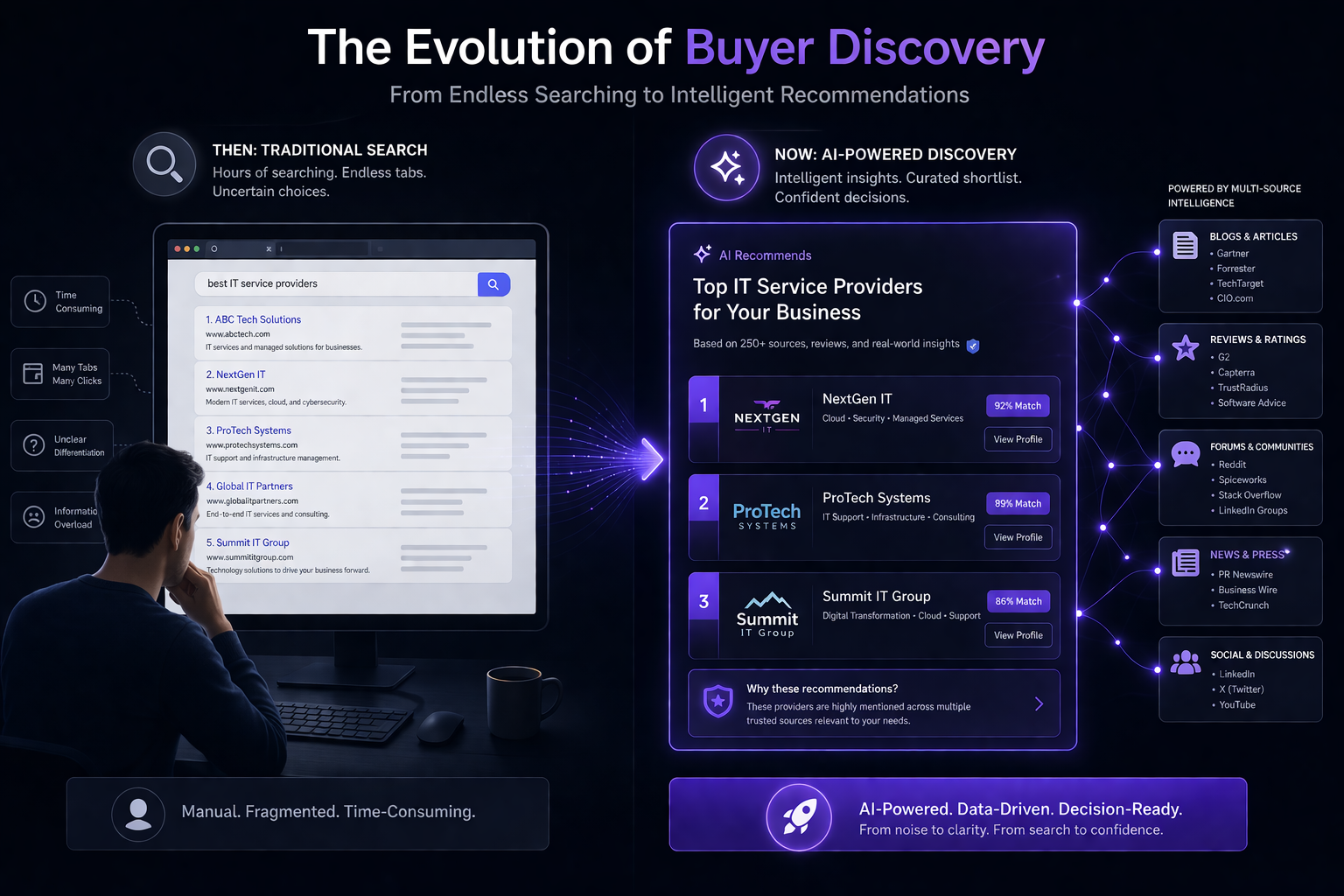
Search behavior is shifting. More buyers are turning to AI-driven tools to ask questions, compare options, and get recommendations. In many cases, they are not clicking through multiple websites at all. Instead, they are relying on answers generated from a mix of sources across the internet.
That shift has real implications for MSPs. If your business is not being referenced in the sources these systems rely on, you are not just ranking lower in search results. You may not be showing up at all.
Lead generation can no longer be something you address when there is extra time. It needs to be intentional, data-driven, and aligned with how discovery works today. That includes traditional SEO, but also a broader focus on where and how your company is mentioned across third-party sites, communities, and industry content.
For MSPs that want consistent growth, this means building a lead generation strategy that supports both visibility and credibility across the full digital landscape. When done well, it leads to stronger pipeline quality, better conversion rates, and more predictable revenue over time.
One of the biggest mistakes MSPs make when trying to generate leads is casting the net too wide. If you are trying to market to everyone, chances are you are connecting with no one. Effective lead generation starts with clearly understanding who your ideal client is, what problems they are dealing with, and how your services can make their lives easier.
That has always been true, but it matters even more now. AI-driven tools rely heavily on context when generating recommendations. The more clearly your business is associated with a specific audience, set of problems, and use cases, the more likely you are to be included when those questions are asked.
Start with geography. Many MSPs focus on local markets, but geographic targeting should be intentional. Buyers often include location-based context in their searches, and both search engines and AI tools rely on consistent signals across the web. This means aligning your website, local SEO, directories, and third-party mentions with the regions you serve.
Next, define the types of businesses you serve best. Whether that is small businesses needing full IT support or mid-sized companies looking for specialized services, clarity here makes everything else easier. It shapes your messaging, your content strategy, and even your outbound targeting.
Industry focus is another lever. Specializing in a vertical like healthcare, finance, or legal allows you to create more relevant content, earn more targeted backlinks, and show up in industry-specific searches and discussions. It also increases the likelihood that your business is mentioned in the right contexts across third-party sites.
Finally, consider how your buyers behave. Some are actively researching solutions through search and AI tools, while others rely more on referrals, reviews, and community input. Understanding where they look for information helps determine where you need to show up, whether that is Google search, review platforms, LinkedIn, or forums.
Key Takeaways:
Once you have defined your audience, the next step is building a system that connects with them consistently. A strong lead generation strategy does not rely on a single tactic. It brings together multiple channels that work together to generate, capture, and convert demand.
What has changed is where and how buyers discover providers. Visibility is no longer limited to your website or search rankings. Buyers are finding MSPs through search engines, AI tools, third-party content, review platforms, and online communities. A strategy that focuses on only one channel will miss a large portion of the market.
At a foundational level, your website still plays a critical role. It should be structured to convert interest into action through clear messaging, relevant content, and straightforward calls to action. But it is no longer the starting point for most buyers. Instead, it acts as a validation point within a broader discovery process.
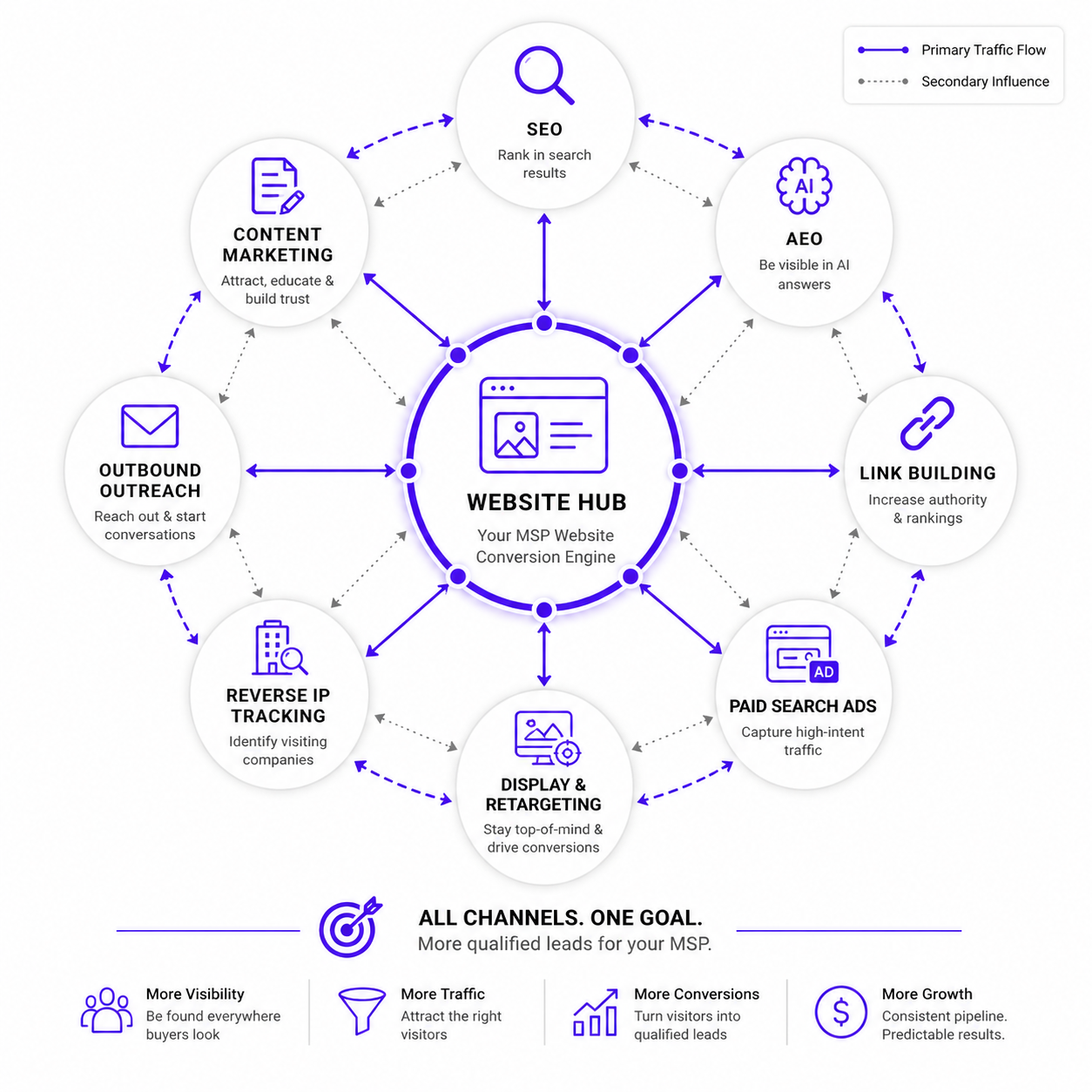
A modern MSP lead generation strategy combines inbound visibility, outbound engagement, and paid acquisition to create consistent pipeline. Rather than relying on a single source of leads, the goal is to build multiple entry points that capture demand at different stages of the buying journey.
In practice, that typically includes:
When these elements are aligned, they reinforce each other. Content drives traffic, authority improves visibility, intent data surfaces opportunities, and outreach converts interest into conversations. The result is a more predictable and scalable lead generation system.
Key Takeaways:
Visibility gets you noticed, but credibility is what drives action. It is one thing to show up. It is another to be trusted enough for a prospect to reach out.
Traditionally, credibility has been tied to domain authority. Earning backlinks from respected websites helps improve search rankings and signals that your business is established. That still matters, but it is no longer enough on its own.
Today, credibility is built across a wider set of sources. Buyers and AI-driven tools rely heavily on third-party validation when evaluating providers. That includes review platforms, industry blogs, comparison sites, and online communities. If your business is not being mentioned in those environments, it becomes harder to build trust and visibility at scale.
This is where citations play a critical role. Consistent mentions of your company across relevant platforms reinforce your authority and increase the likelihood that your business will appear in both search results and AI-generated recommendations. These mentions do not always need to link back to your website to be valuable. What matters is that your business is consistently associated with the right services, industries, and use cases.
In practice, building credibility today includes:
At the same time, it helps to understand who is already showing interest in your business. Tools like reverse IP lookup can identify which companies are visiting your website, even if they do not convert. This allows you to prioritize outreach and engage prospects with more relevant messaging.
Intent data adds another layer. These signals show what companies are researching across the web, not just on your site. With the right tools, you can identify when a business begins exploring services you offer and engage them earlier in the buying process.
When you combine strong third-party visibility with real-time insight into buyer behavior, you move beyond passive credibility. You are actively reinforcing trust across the channels that influence decisions while engaging prospects at the right moment.
Key Takeaways:
A strong marketing strategy only works if sales is ready to act on it. To get the most out of your lead generation efforts, marketing and sales need to operate as a single system. That starts with clearly defining what qualifies as a sales-ready lead, establishing clean handoff processes, and using data to understand what is actually driving pipeline.
What has changed is the type of signals that indicate buying intent. It is no longer just form fills and demo requests. Today, intent shows up through website activity, content engagement, third-party research, and the types of questions buyers are asking through search and AI tools.
This makes alignment more important than ever. Marketing is responsible for generating visibility and surfacing early signals, while sales needs to interpret those signals and act on them quickly. When both teams are working from the same data, it becomes much easier to prioritize the right opportunities and engage prospects with relevant messaging.
In practice, this often includes:
For many MSPs, a Business Development Representative function helps bridge this gap. Instead of waiting for inbound leads, BDRs engage accounts that are already showing intent. This shifts the model from reactive to proactive, allowing your team to start conversations earlier in the buying process.
With the right systems in place, sales teams can focus on high-value opportunities rather than cold outreach. Marketing drives visibility and surfaces intent, and sales converts that intent into pipeline with better timing and context.
Key Takeaways:
Your website should function as more than an online brochure. It should act as a system designed to capture and convert demand. While many buyers may discover your business elsewhere, your website is where they validate, compare, and decide whether to take the next step.
That makes clarity and structure critical. Visitors should immediately understand what you offer, who it is for, and how to engage. Messaging should align with how buyers describe their problems, not internal technical language. The goal is to reduce friction and make decision-making easier.
Content plays a central role in this process. Service pages, case studies, and supporting resources should address specific use cases and common objections. Well-structured content not only improves search visibility, but also increases the likelihood that your site is referenced and trusted as part of the broader research process.
Just as important is how your site converts traffic. Many MSP websites generate visits but fail to turn them into opportunities. This is where conversion rate optimization becomes critical. Small improvements in layout, messaging, and calls to action can have a meaningful impact on lead volume.
In practice, an effective website strategy includes:
It is also important to support different entry points. Some visitors arrive ready to talk, while others are still researching. Offering multiple ways to engage, such as guides, assessments, or consultations, helps capture demand across different stages of the buying journey.
When your website is structured to both inform and convert, it becomes a central part of your lead generation system rather than a passive asset.
Key Takeaways:
Not every prospect is ready to engage on the first visit. That is why marketing materials play an important role in nurturing interest and building trust over time. Brochures, solution sheets, and case studies help explain your services and reinforce your credibility.
What has changed is how this content is used. It is no longer enough to create assets and host them on your website. To be effective, content needs to be distributed across the channels where buyers are actively researching and comparing providers.
Case studies are a strong example. They do more than support sales conversations. They can be repurposed into multiple formats and shared across platforms, increasing the chances that your expertise is seen and referenced. The same applies to guides, whitepapers, and how-to content. These assets can be broken into smaller pieces and used across LinkedIn, industry blogs, and community discussions.
This type of distribution plays a direct role in visibility. Many of the sources that influence buying decisions and AI-generated recommendations are external. Review platforms, third-party blogs, and online communities often shape how providers are perceived. If your content is not present in those environments, you are missing opportunities to be discovered and trusted.
In practice, this means treating content as a multi-channel asset rather than a one-time deliverable.
When your content is consistently distributed across multiple channels, it strengthens both visibility and credibility. Instead of relying on a single touchpoint, you create multiple opportunities for prospects to encounter and engage with your business.
Key Takeaways:
Building a consistent lead generation system today requires more than just time and effort. It requires coordination across multiple channels, access to the right data, and the ability to execute consistently over time. For many MSPs, that is difficult to manage internally while also delivering day-to-day client work.
The challenge is not just running individual tactics. It is bringing them together into a cohesive system. SEO, content, link building, paid ads, intent data, and outbound outreach all need to work together. When these efforts are disconnected, results tend to be inconsistent and difficult to scale.
A more structured approach focuses on aligning these elements. Visibility efforts drive awareness, intent data surfaces opportunities, and outreach converts that interest into conversations. Each part of the system supports the others.
In practice, this often includes:
Whether handled internally or with external support, the goal is the same. Build a system that produces consistent, qualified opportunities rather than relying on one-off campaigns or unpredictable lead sources.
Key Takeaways:
There is no single playbook for MSP growth, and there never has been. What is changing is how buyers find and evaluate providers. Discovery is becoming more fragmented, influenced by third-party sources, and increasingly shaped by AI-driven recommendations.
For MSPs, this creates both a challenge and an opportunity. Traditional approaches to lead generation are no longer enough on their own, but the companies that adapt early can gain a meaningful advantage.
A more effective approach is not about replacing what has worked. It is about expanding it. By combining SEO, content, link building, paid acquisition, and intent-driven outreach into a coordinated system, MSPs can build a more resilient and predictable pipeline.
The next step is not to overhaul everything at once. It is to understand where your business is visible today, where it is not, and how that aligns with the way your buyers are actually searching for solutions.
 Eric Smith : Aug 5, 2026, 9:00:00 AM
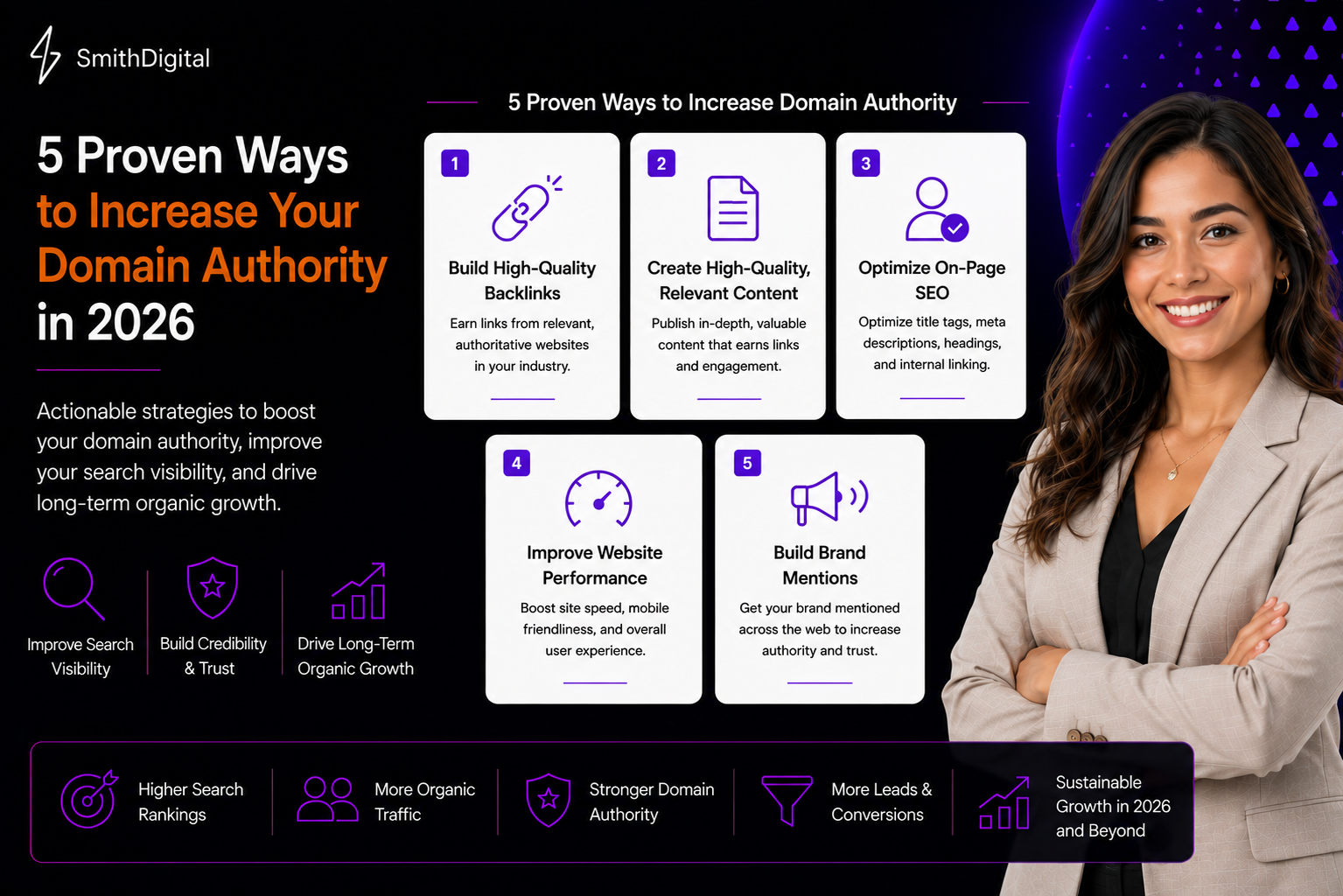
Learn how to increase your domain authority with five proven strategies that improve website authority and SEO performance.

Optimize your business broker website with SEO to rank higher, attract qualified leads, and dominate your local market. Learn key strategies in our...
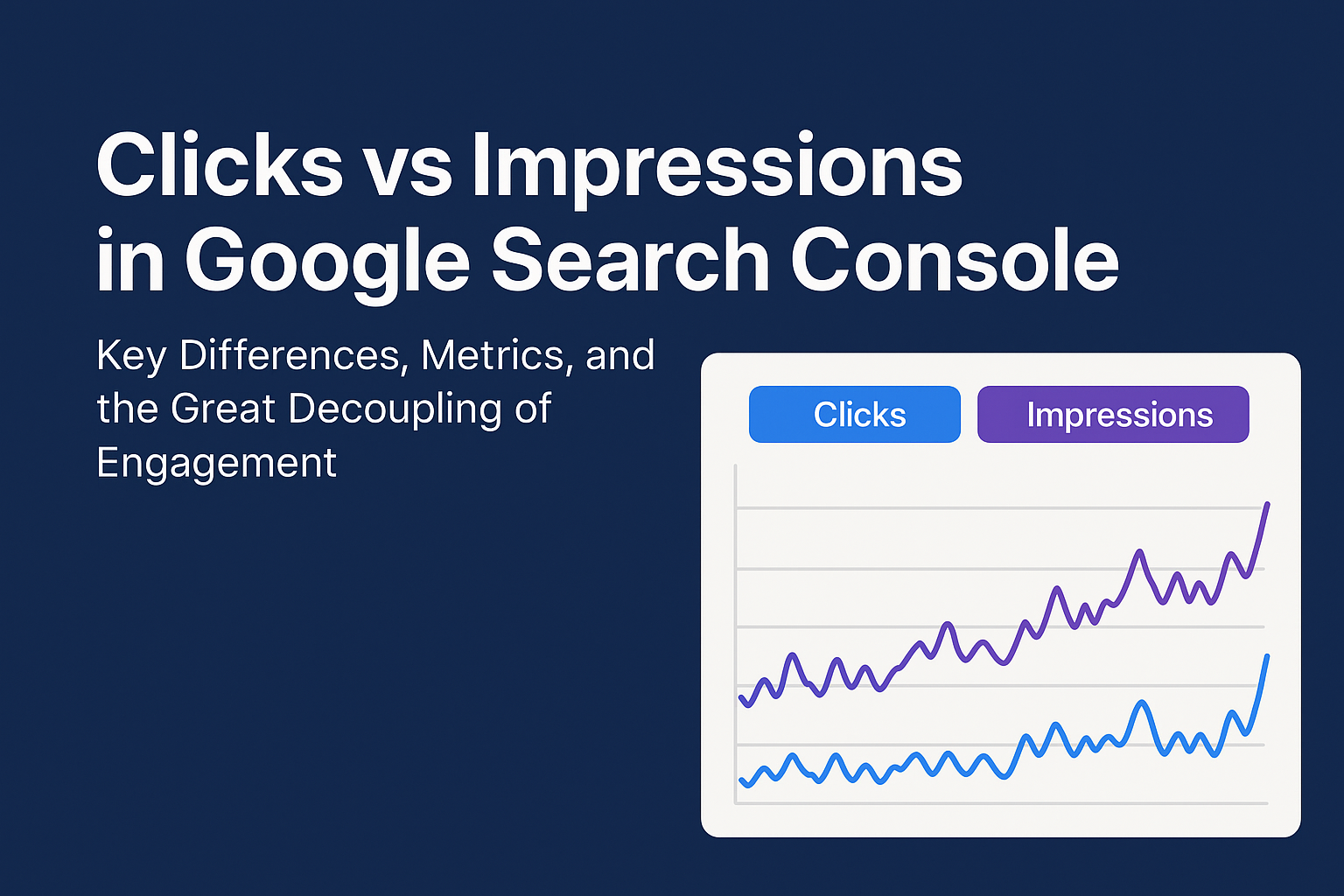
Discover the difference between clicks and impressions in Google Search Console. Learn what the Great Decoupling means for SEO and marketers, and how...