The Secret Pages Fueling Google AI Results (And Why Yours Might Be Invisible)
A new BrightEdge report reveals that 82% of Google AI Overview citations come from deep content pages—not homepages. Learn what this shift means for...
8 min read

By 2025, I’d crossed the 15-year mark working in SEO. I’ve lived through Panda, Penguin, Hummingbird, RankBrain, mobile-first indexing, voice search, E-E-A-T, core updates that wiped out entire affiliate empires overnight, and more declarations of “SEO is dead” than I can count.
The pattern that’s held true across every cycle is straightforward: SEO doesn’t disappear. It evolves. Each evolution brings meaningful change, but it also generates a disproportionate amount of noise.
The rise of AI-powered search tools like ChatGPT, Gemini, and Perplexity triggered the latest version of that cycle. Social feeds quickly filled with confident claims that Google was finished, organic search was irrelevant, and a new discipline had arrived to replace SEO entirely.
The reality on the ground looks very different. The data and hands-on work with B2B brands don’t support the idea that SEO has been replaced. What has changed is meaningful, but what hasn’t changed is far more important.
Major shifts in search tend to trigger a familiar response: a rush to rebrand what already exists. In 2025, that showed up as GEO (Generative Engine Optimization), AEO (Answer Engine Optimization), LLMO, and a growing list of similar labels—each positioned as a fundamentally new discipline.
The implied message was simple. SEO belonged to the past, and these new acronyms owned the future.
In practice, most of this was positioning, not genuine technical change. Many of the loudest voices pushing the “SEO is over” storyline were new to the field, highly motivated to say something dramatic, or selling products that benefit when marketers feel fear and urgency.
AI search is real, and it matters. But renaming long-standing best practices doesn’t make them novel, and it doesn’t erase the foundations they depend on.
.png?width=2048&height=2048&name=unnamed%20(3).png)
When you strip away the hype, a simple truth becomes obvious. AI search systems do not operate independently from the web.
Large language models are not authoritative sources on their own. When accuracy matters, especially for factual, commercial, or time-sensitive queries, they rely on external data. That data comes from search indexes, licensed sources, and heavily cited third-party content.
In practical terms, that means the same fundamentals that have always governed SEO still determine whether a brand is even eligible to appear in AI-generated responses. These include:
Clean crawlability and indexation
Clear topical focus and intent alignment
Strong entity associations
Authoritative content that genuinely answers questions
Credible off-site validation through links and brand mentions
This aligns with what I’ve seen repeatedly working with B2B brands over the past two years. Sites that already understood on-page optimization, internal linking, entity usage, and pillar-and-cluster content consistently performed better in AI-driven discovery environments. Not because they were chasing AI visibility, but because they had built strong SEO foundations that made them easy for both search engines and AI systems to understand.
AI visibility isn’t earned in spite of SEO. It’s earned because of it.
One reason the “SEO is dead” narrative falls apart under scrutiny is that the proposed alternatives rarely introduce anything materially new.
Look closely at many GEO or AEO recommendations and you’ll find familiar guidance such as:
Structuring content clearly
Answering real user questions directly
Using schema and structured data appropriately
Building topical authority over time
Earning mentions and links from reputable sources
These are not breakthroughs. They are the core of modern SEO, and they have been for years.
In some cases, the advice goes beyond redundant and crosses into risky territory. Scaled AI content generation, artificial manipulation of Reddit or forum signals, hidden instructions for language models, and duplicate website versions created solely for AI ingestion are all being promoted as shortcuts.
Anyone who has lived through Google’s Helpful Content updates should recognize how fragile that approach is. Short-term visibility tactics have always existed, but they rarely age well. AI has simply made them easier to package, automate, and sell—without changing the underlying risk profile for brands that depend on sustainable, defensible growth.
Acknowledging that SEO still matters does not mean ignoring real shifts in how AI-powered search systems work. One of the most important changes, especially for revenue leaders and go-to-market teams, is how AI systems gather and assemble answers. When someone asks a detailed or time-sensitive question in an AI tool, the system often does not rely solely on what it already knows. Instead, it actively goes out to the web to verify facts and gather supporting information.
To do this, the AI breaks a single question into many related follow-up searches that run in parallel across traditional search engines and trusted sources. You can think of this as the AI doing the research work a human would normally do—evaluating multiple sources, checking for consistency, and weighing credibility—just at machine speed.
From a business perspective, this has an important implication. Your company does not need to rank for one exact phrasing of a question. You need to be visible and credible across the broader set of related topics that an AI system might explore while forming its answer. AI systems pull from patterns, not one-off keywords.
This is why chasing every long-tail AI-generated question individually is usually a mistake. These questions change constantly based on context, user history, and intent. Optimizing for them one by one is like trying to hit a moving target that keeps shifting.
The real opportunity lies in something more durable. When AI systems repeatedly see your brand associated with the same core topics across your website, industry publications, review sites, and third-party mentions, they begin to treat your company as a reliable source. That consistency is what increases the likelihood of being cited or referenced in AI-generated answers.
In practical terms, this is less about gaming prompts and more about building a clear, authoritative footprint around the problems you solve and the markets you serve. For B2B teams, that means aligning SEO, content, and sales enablement so that your narrative about pain points, use cases, and outcomes shows up consistently wherever buyers and AI systems look.
Another meaningful shift is how AI systems consume different types of content. Modern AI models do not just read text. They can interpret images, analyze video transcripts, and understand audio content just as easily. This means that your written content, product videos, webinars, podcasts, diagrams, and visual explainers all contribute signals about what your brand knows and stands for.
This is not entirely new. Search engines have been indexing video, audio, and images for years. What has changed is that AI systems now use those formats directly as source material when generating answers. A quote from a webinar transcript, a step shown in a product video, or a detail explained in an infographic can all surface without a user ever clicking through to a page.
For businesses, the takeaway is straightforward. Clear explanations, consistent messaging, and useful content across multiple formats increase the chances that AI systems understand your expertise and surface your brand when it matters—whether that is a CMO researching solutions, a sales leader validating a vendor, or a buyer shortlisting platforms. The goal is not to create content for machines, but to make it easy for both humans and AI to understand what you do, who you help, and why you are credible.
Organic search is still doing the heavy lifting for discoverability, even as AI-powered interfaces reshape how people find and consume information.
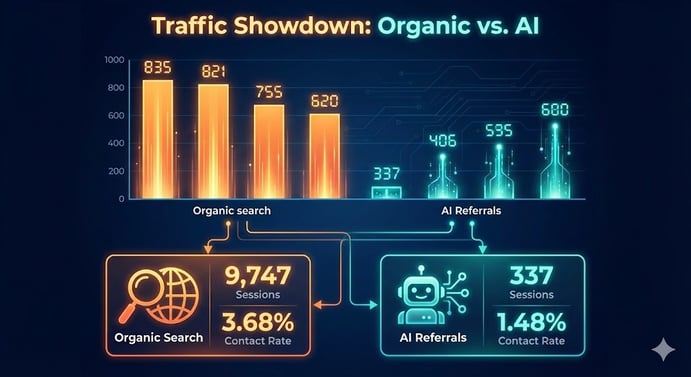 Industry data backs this up. BrightEdge’s 2025 research shows that Google still accounts for more than 90 percent of global search activity. Similarweb data indicates that AI platforms such as ChatGPT and Perplexity collectively drive less than 1 percent of total referral traffic across the web.
That imbalance is even more pronounced in real B2B environments. Across enterprise and professional services sites I work with, organic search traffic continues to dwarf direct referrals from AI tools. LLM-driven traffic exists, but it remains incremental—not foundational—to pipeline generation.
This dynamic is structural, not accidental. Most AI platforms are designed as closed systems. Their goal is to answer questions directly in the interface and keep users there, not to send traffic back out to websites. As a result, even when brands are cited or referenced, the downstream traffic impact is often limited.
Google operates differently. Even with AI Overviews, AI Mode, and other generative features layered into the experience, Google still functions as a discovery and distribution engine. It continues to send meaningful volumes of traffic to publishers, brands, and service providers, even if the percentage of clicks per query is declining.
Critically, AI systems themselves still lean on traditional search engines as a grounding layer when accuracy, commercial intent, and freshness matter. In many cases, AI tools are effectively doing the Googling on a user’s behalf, then synthesizing what they find into a single answer.
This is why pivoting entirely toward AEO or GEO while deprioritizing Google is not just premature—it’s risky for any team that depends on predictable pipeline. The smarter move is not to choose AI search over SEO, but to invest in a user-focused strategy that serves both. That means adhering to Google’s guidelines, maintaining strong SEO fundamentals, and ensuring content is clear, authoritative, and well-structured so it can perform in traditional search and be accurately interpreted by AI systems.
As long as Google remains the dominant source of discovery and the primary grounding layer for AI-generated answers, SEO will continue to be a critical driver of visibility, demand, and revenue for B2B organizations.
Another pattern has become difficult to ignore over the past year. The people most eager to declare the death of SEO are often the least familiar with how modern search and AI-driven discovery actually work.
Practitioners who have spent real time in the trenches tend to be more measured. They see AI search as an interface evolution, not an extinction event. They understand that fundamentals compound over time, across channels, and now across AI surfaces that lean on the same underlying signals.
This industry has already navigated transitions like mobile-first indexing, voice search, and semantic understanding. Each time, the interface changed. Each time, the underlying principles that drive visibility, relevance, and trust endured.
AI did not replace SEO. It exposed who was leaning on shortcuts and tactics instead of building durable expertise, clear information architecture, and credible signals that both search engines and AI systems can trust.
AEO, GEO, or whatever acronym ultimately sticks is not a replacement for SEO. It’s an extension of your organic marketing toolkit and another surface where strong fundamentals win.
The teams that will come out ahead aren’t chasing every new label or spinning up dashboards for the buzzword of the month. They’re staying grounded in a few durable priorities:
Building real topical authority around the problems they solve and the markets they serve
Communicating clearly and consistently about their offers, use cases, and outcomes across every owned channel
Earning trust beyond their own websites through PR, analyst and review sites, partner features, and credible third-party mentions
Measuring impact in terms that matter to the business: revenue, qualified demand, influenced pipeline, and sales velocity
SEO has always rewarded patience, clarity, and discipline. AI search doesn’t change that—it scales those traits across more interfaces, surfaces, and decision points in the buyer journey.
If you’re rethinking your SEO strategy heading into 2026, the smart move isn’t abandoning what already drives qualified demand. It’s tightening the fundamentals, modernizing how you measure impact, and strengthening the foundation so it can support whatever interface comes next—SERPs, AI overviews, or the answer engines your buyers and revenue teams rely on.
And if history is any indication, another declaration of SEO’s death is already on the way. The teams that stay focused on fundamentals will be the ones turning those headlines into pipeline and revenue instead of panic.
For readers who want a clear takeaway without getting lost in industry nuance, here are concrete actions you can implement in 2026. These are intentionally specific and execution-focused.
Map and strengthen your core topic areas. Start by listing the 3 to 5 problems your company is best known for solving. For each problem, audit whether you have a clear primary page that explains the topic in depth, supported by related articles that answer common follow-up questions. Use tools like Google Search Console, Ahrefs, or Semrush to identify gaps where users are already searching for answers you don’t clearly address.
Optimize for clarity and keywords at the same time. Start with a clear primary keyword and supporting entities for each core page, then write in plain, direct language that makes those terms meaningful to a human reader. Ensure URLs, title tags, H1s, meta descriptions, and internal links reinforce the primary topic, while the opening paragraphs clearly state who you help, what you do, and why it matters. Clarity and keyword optimization are not opposing forces. The best-performing pages intentionally combine both from the start.
Create one authoritative resource per core topic. Instead of publishing many short posts, build one substantial guide per major topic that you regularly sell or speak about. These pages should be comprehensive, updated regularly, internally linked from across the site, and treated as long-term assets rather than campaign content.
Systematically earn third-party validation. Identify 10 to 20 industry publications, review sites, communities, or partner blogs that AI systems frequently cite. Proactively pitch insights, contribute quotes, encourage customer reviews, and pursue mentions that reinforce your expertise. Track brand mentions, not just backlinks, using tools like Google Alerts, Ahrefs, or Brand24.
Expand content formats with a clear workflow. For each major article or guide you publish, create at least one supporting format such as a short video, webinar clip, infographic, or podcast segment. Publish transcripts alongside these assets so both humans and AI systems can easily extract meaning. This increases surface area without multiplying effort.
Measure SEO impact beyond traffic. Add branded search growth, assisted conversions, and organic-influenced pipeline to your reporting. In tools like GA4 and HubSpot, track how often organic visitors return, convert later, or interact with sales. This reframes SEO as a revenue-supporting channel rather than a traffic source.
Avoid automation without oversight. If you use AI to assist with content production, keep a human review process in place. Validate facts, remove fluff, and ensure every piece serves a real user need. Use AI to accelerate research and drafts, not to publish at scale without accountability.

A new BrightEdge report reveals that 82% of Google AI Overview citations come from deep content pages—not homepages. Learn what this shift means for...
 Eric Smith : Oct 28, 2025, 9:30:00 AM
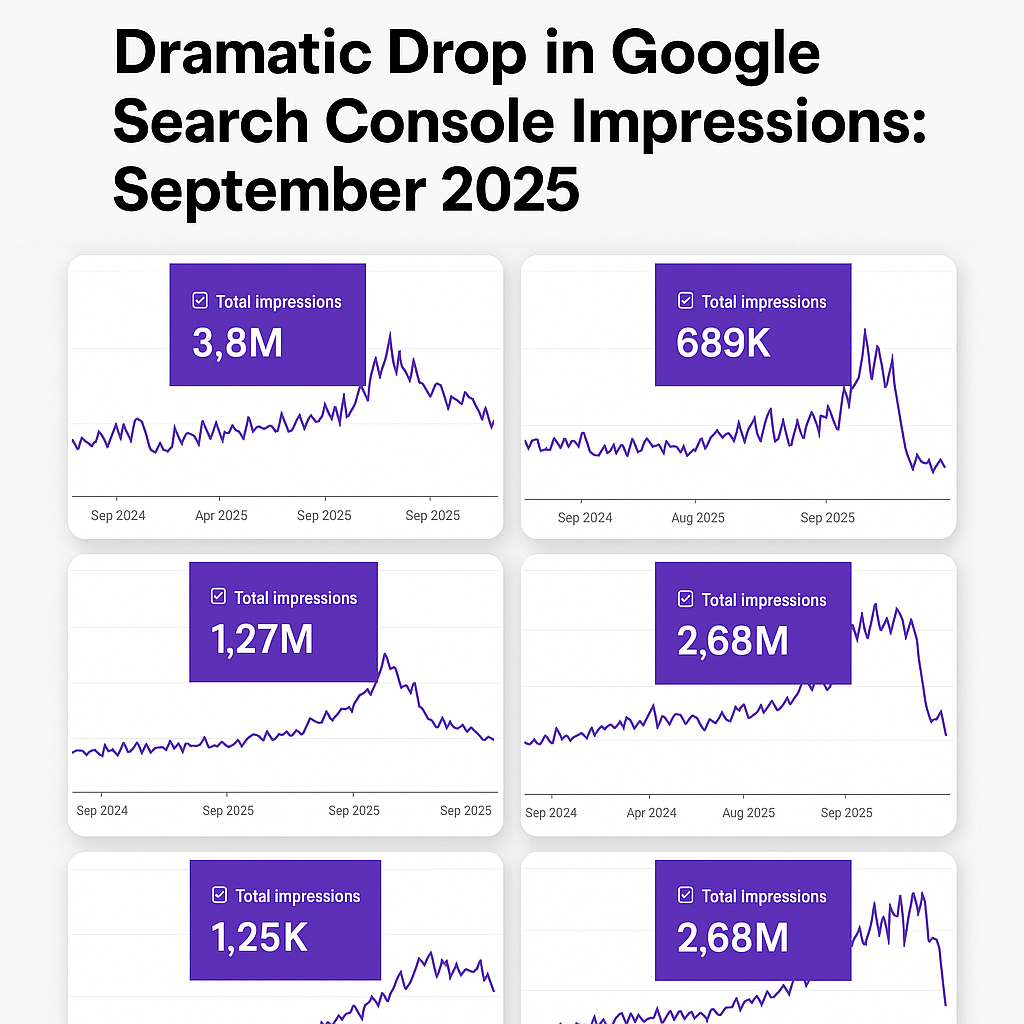
Google Search Console impressions dropped sharply in September 2025. Learn what changed, why it happened, and how to adjust your SEO strategy now.
 Eric Smith : May 8, 2026, 12:08:07 PM
AI discoverability is not replacing SEO. Learn why strong content, topical authority, technical SEO, and third-party validation help brands earn...